

How Natural Stone Is Reframing Contemporary Architecture
Marble and natural Stones are the main construction element of ancient civilisations. These natural gems are not only confined to interior design but also contemporary architecture after centuries.
In recent years, it has become a defining material in architectural facades, especially for projects seeking permanence, cultural depth, and refined monumentality. Today’s architects are using marble in new ways technically, structurally, and symbolically; creating facades that merge craftsmanship with advanced fabrication technologies.
We as Sezgin marble edited the leading global trends shaping the use of marble in contemporary facades, supported by examples from architectural practice for you!
1. Large-Format Marble Panels & Seamless Surfaces
Advancements in cutting and anchoring systems now allow large monolithic panels reaching 240–300 cm lengths to be mounted with minimal joint exposure.
This continuous effect creates a strong architectural impact: The facade reads as a monoblock stone plane rather than a segmented grid.
Example:
Fondazione Prada, Milan (OMA): Travertine and marble sheets create a field-like surface emphasizing shadow play and the building’s sculptural mass.
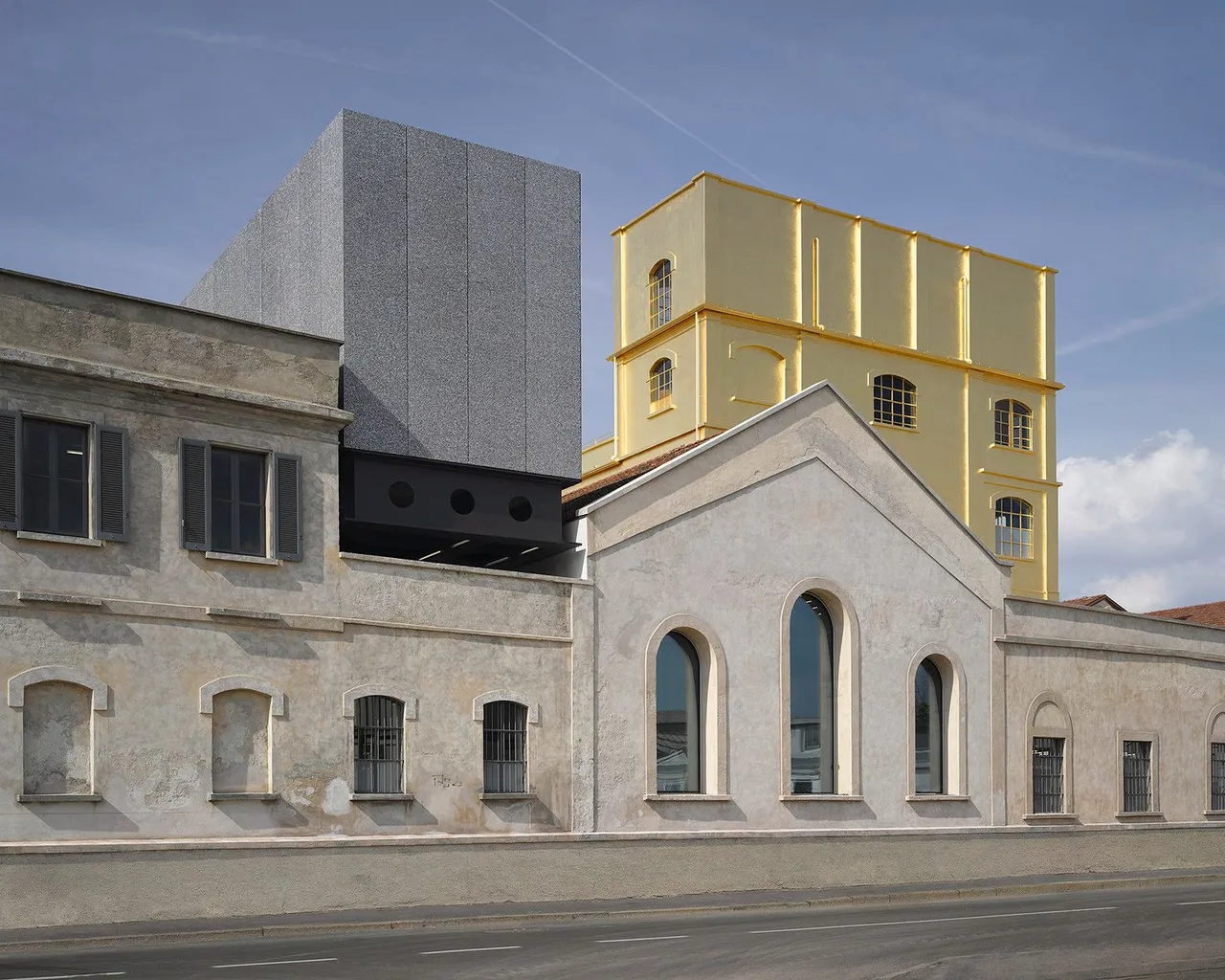
Fondazione Prada, Milan (OMA)
2. Book-Match Marble on Facades
Once limited to interiors, book-matching a.k.a mirroring the veining across panels is now appearing outdoors.
This design decision leads to authentic patterns in every time. The facade becomes a dynamic graphic surface, almost like a site-specific artwork.
Example:
Cláudio Vilarinho’s Casa L: A facade where book-matched marble veining establishes a strong, graphic identity visible from afar.
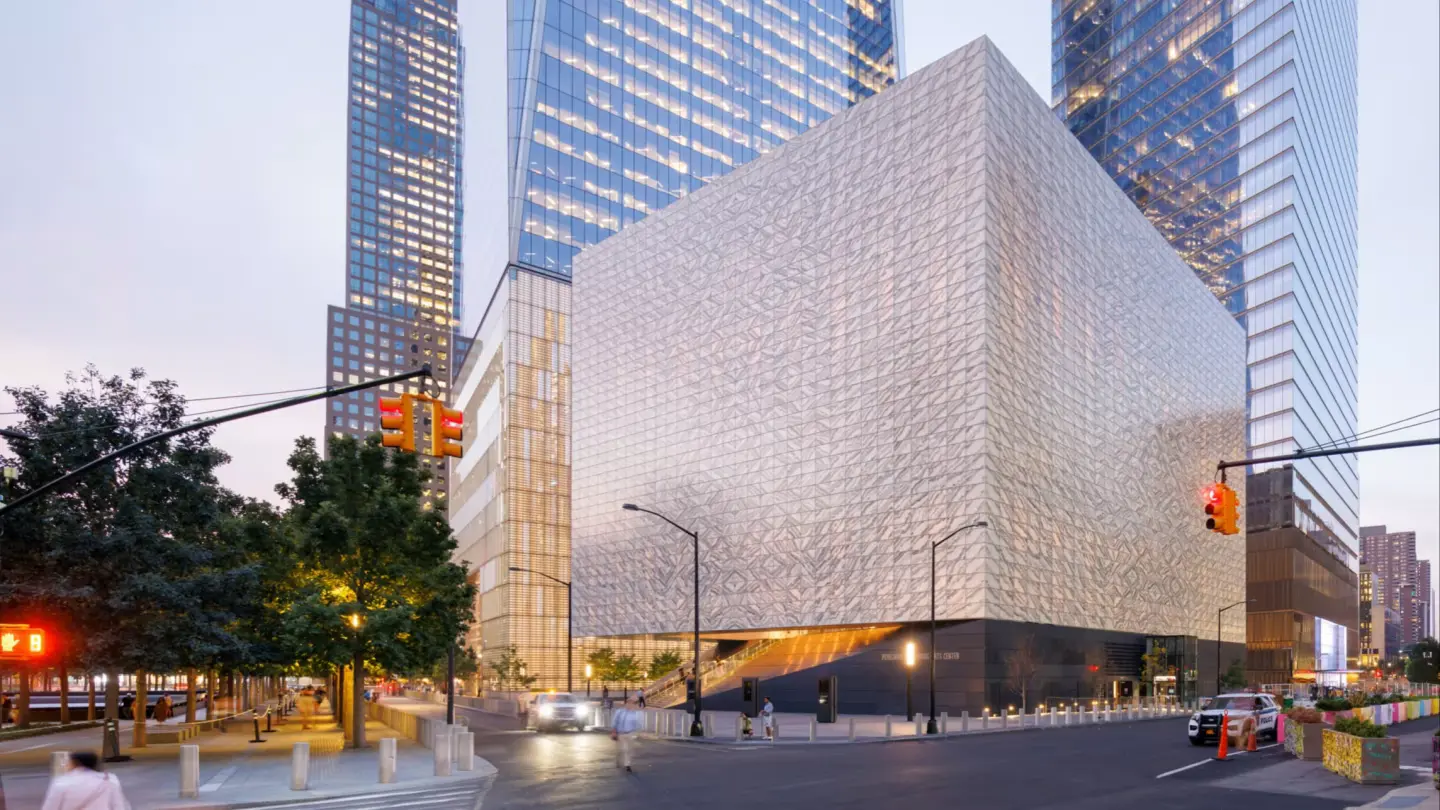
Perelman Performing Arts Center at The World Trade Center
3. Textured, Chiseled, or Flamed Surfaces
Architects are moving away from polished surfaces and opting for tactile, light-diffusing textures.
This architectural approach is honest to the material’s nature. Increased depth, improved slip resistance for semi-exterior zones, and a more contemporary, less ornamental expression creates strong bonds with mother nature.
Example:
Kéré Architecture’s Burkina Faso projects: Stone facades use hand-chiseled textures to achieve a raw, honest material language.
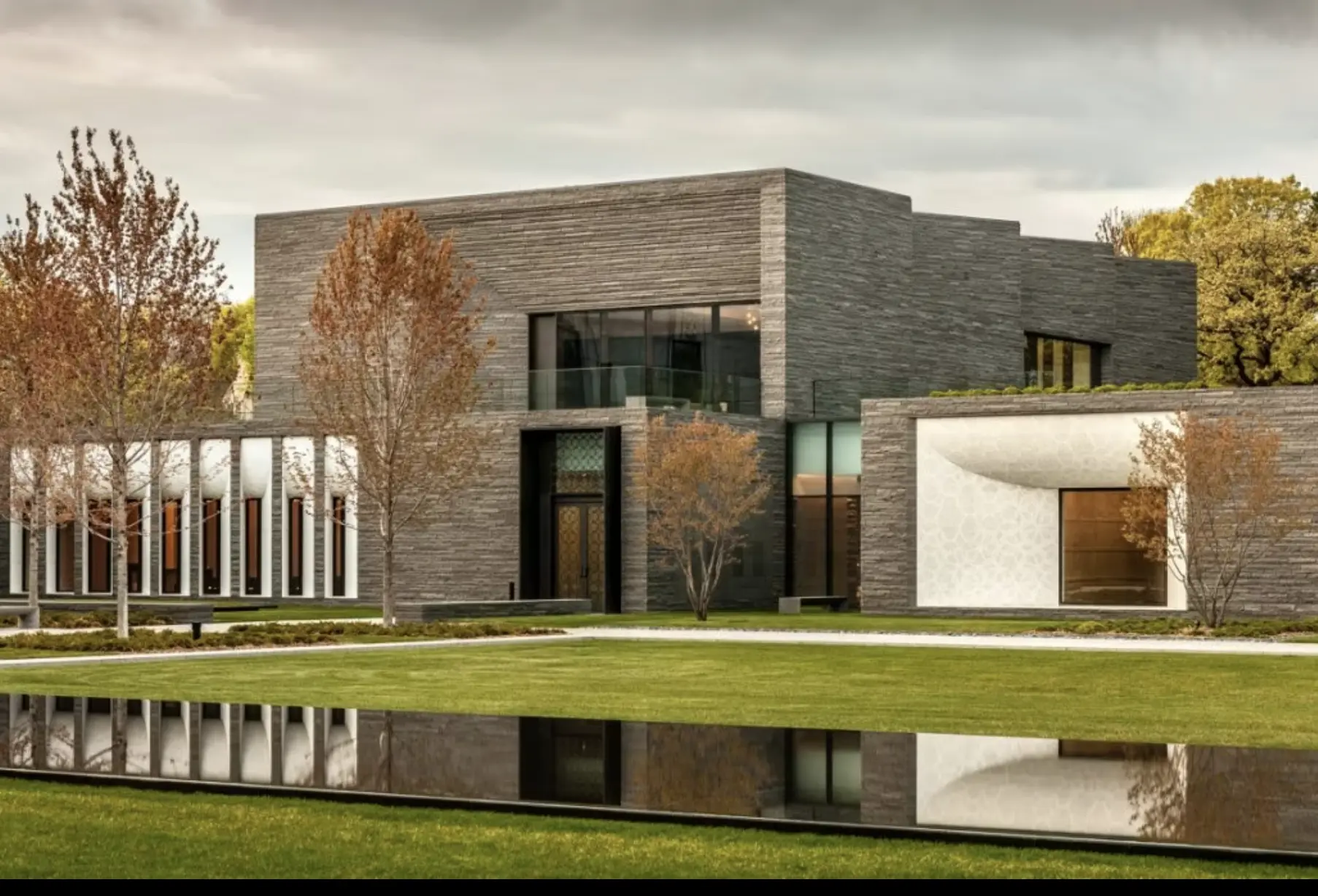
Garden Mausoleum at Lakewood Cemetery, HGA
4. Layered Stone Facades (Double Skin Systems)
Marble is being used as a filter, not just a cladding as a double skin system.. Thin slabs function as a perforated or patterned second skin over glass volumes.
This use creates light filtering, reduced heat load, and a strong tectonic identity.
Example:
11 storey private residence building One-Klemenous in Athens, by Omniview Design showcases a contemporary approach of layers by arametric architecture.

One - Klemenous, Private Residence, Athens, Omniview Design
5. Mixed-Material Facades (Marble + Metal + Glass)
A major 2026 trend is combining dense stone with reflective or lightweight materials.
Contrast between solidity and transparency, playing with mass and void is a trend reflecting the complexities of architectural expressions in-between mother nature and technology dominated era.
Example:
Snøhetta’s Opera House, Oslo (marble + glass): Although mostly horizontal, the marble-glass dialogue defines the architectural language.

Norwegian Opera House, Oslo, Snøhetta
6. Sustainable Sourcing & Low-Waste Fabrication
Architects are increasingly choosing suppliers that offer full transparency in quarrying, cutting, and waste reduction.
This new aproach has impact on lower carbon footprint, smarter use of off-cuts, and alignment with green-building certifications.
This is why we as Sezgin Marble export global by working on block optimization and digital layout planning to reduce unused stone.
From monolithic surfaces to textured skins and multi-material compositions, marble is reclaiming a prominent role in architectural facades. As fabrication technologies evolve, architects are rediscovering marble as a performative, expressive, and future-forward material, not merely a luxurious finish.
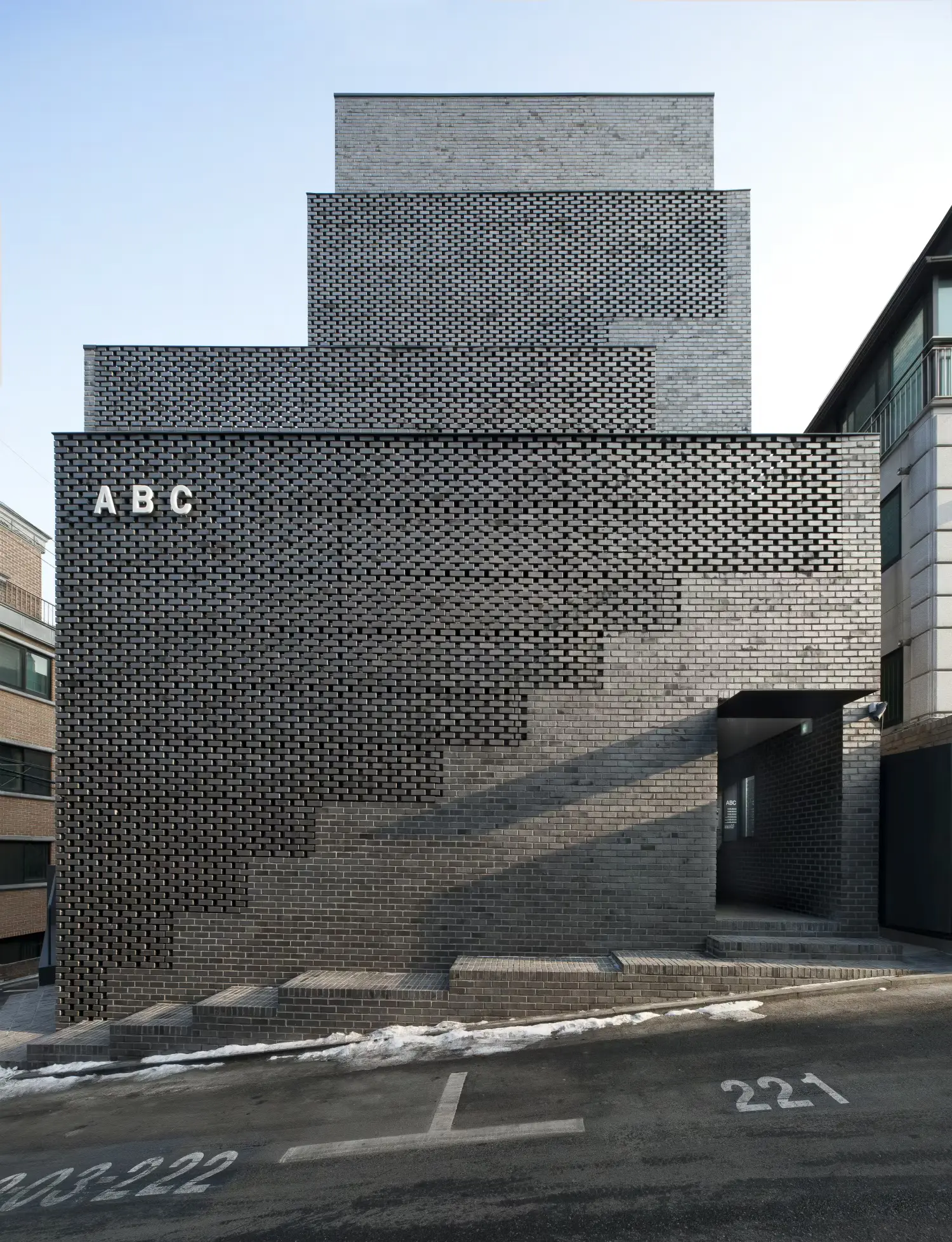
ABC office, Wise Architecture