
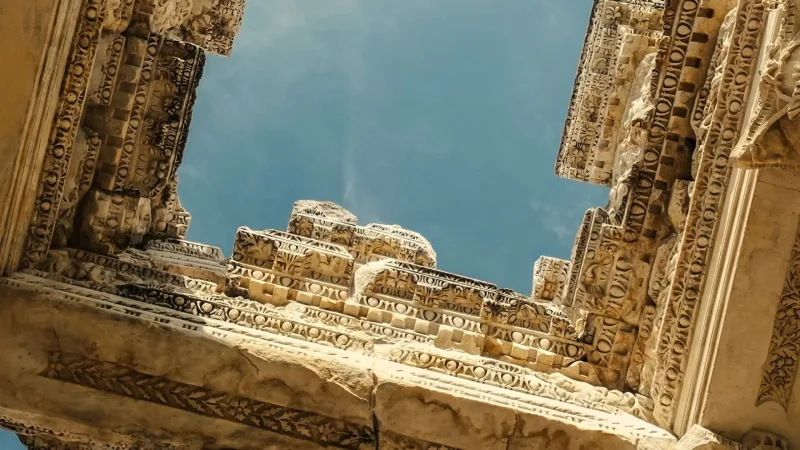
UNDERSTANDING STONE INTELLIGENCE
Marble is one of the leading structural materials since ancient times. Natural stones and marbles are often described as inert, static, and permanent. Yet architects, sculptors, and builders across centuries have treated stone as something far more complex: a material that reacts, adapts, and remembers; and they createdmasterpieces in ever field. While marble is not “alive” in the biological sense, it behaves with a form of material intelligence, responding to climate, time, use, and context in ways synthetic materials cannot.
UNDERSTANDING STONE INTELLIGENCE:
IS MARBLE A LIVING MATERIAL?
Marble is one of the leading structural materials since ancient times. Natural stones and marbles are often described as inert, static, and permanent. Yet architects, sculptors, and builders across centuries have treated stone as something far more complex: a material that reacts, adapts, and remembers; and they createdmasterpieces in ever field. While marble is not “alive” in the biological sense, it behaves with a form of material intelligence, responding to climate, time, use, and context in ways synthetic materials cannot.
What Do We Mean by “Living”?
Stone does not grow, but it evolves by time. This material is durable for ages but alsocarries the traces of ages within too.
Marble absorbs temperature, reacts to humidity, develops patina by time and moststrangely it records human touch.
This responsiveness is what designers increasingly refer to as “material intelligence”.
Geological Time vs Human Time
Marble is formed over millions of years, yet we ask it to perform in buildings for decades or centuries. There is a unique dialogue in this mismatch:
The stone slows architecture down. It resists trends. It rewards long-term thinking.Architectural design and interiors with marble are timeless according to thesequalities.

Private house, London, Jamie Fobert Architects via dezeen
Aging as a Feature, Not a Flaw
Unlike coated or composite materials, marble does not deteriorate silently.
It shows us time. One can easily bond with designs of marble with micro-changes in surface, softening edges and the depth in tone.
This visibility creates trust. You can see how the material lives with you.

Villa Planchart, Venezuela by Gio Ponti, 1953
Why Architects Are Returning to Stone
Marble is at the core of design business. In an era of fast construction and disposable finishes, marble offers predictability through permanence as well as emotional weight and material honesty
This is why natural tone becomes a collaborator in design process, not a surface treatment.
We know, to call marble “living” is not poetic exaggeration. It is an architectural acknowledgment; some materials do more than occupy space they participate in it.

Valley, Amsterdam by MVRDV