
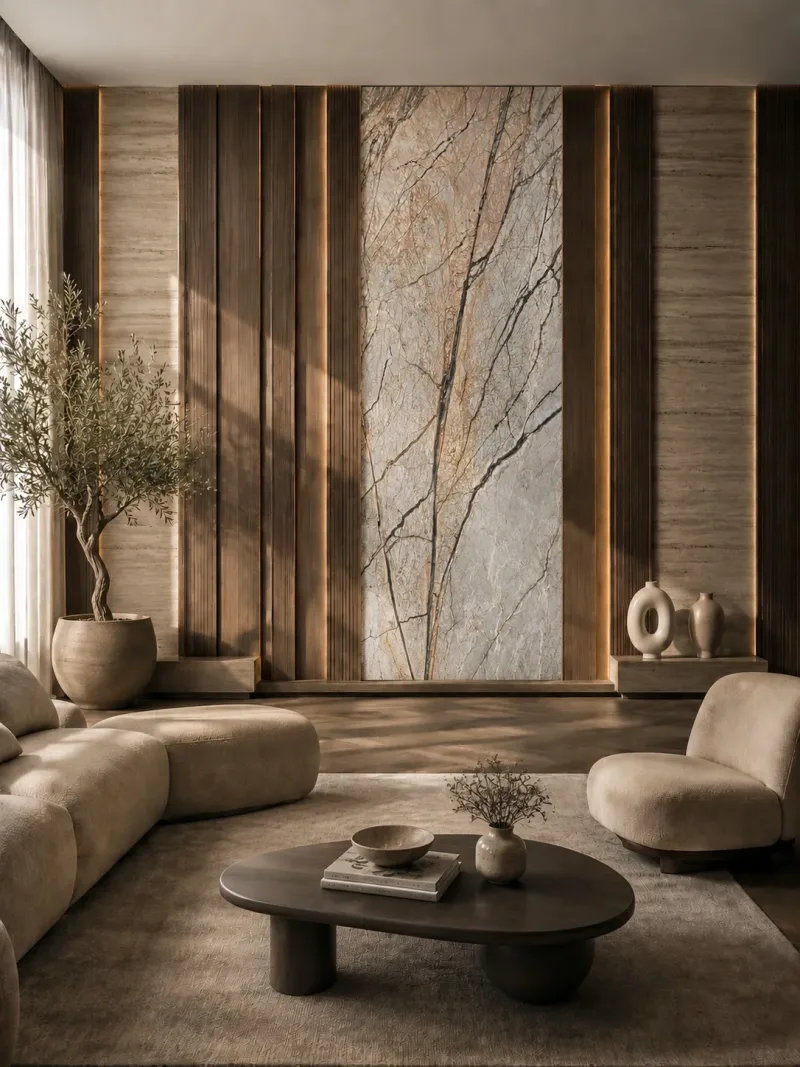
From Classic to Contemporary: Specifying Marble Finishes for the Modern Interior
Marble has always been the best material for architectural design. From Roman civic structures and Ottoman palaces to twentieth-century banking halls and the marble-clad foyers of mid-century corporate headquarters, the material has been used as a load-bearing symbol of permanence, public authority and private wealth. That symbolic register has not disappeared. What has changed is the way contemporary architects, interior designers and developers specify the stone: less as a finished surface to be admired, more as a worked material to be detailed, articulated and integrated.
For the specifier today, the operative question is no longer which marble. It is which finish, at which thickness, against which adjacent material, in which lighting condition. The marble itself, with its block source, its quarry consistency, its veining pattern, remains the foundation. But the finish is what carries the interior from classical reference to contemporary architecture.
At Sezgin Marble, this is the conversation we have most often with architects and design studios working on luxury condominiums, private villas, boutique hospitality projects and high-end commercial fit-outs. The Turkish stones we extract and process from Anatolia are the same blocks that built monuments over centuries. The difference is in how they are surfaced, edged and assembled today.
The Polished Surface: Still Powerful, No Longer Default

For most of the twentieth century, the polished marble surface was the visual shorthand for luxury. Reflective floors, glossy bathroom walls, formal entrance halls, dramatic open-riser staircases… They all relied on a high-gloss finish achieved through progressively finer abrasive heads, finishing at 3000+ grit and often sealed with a final crystallisation treatment. The leading design magazines showcase a long-running archive of marble flooring projects within this lineage: polished marble has been, and remains, the standard for high-impact interiors from foyers to kitchens and baths.
A polished finish maximises chroma. It deepens the contrast between vein and field, intensifies the apparent saturation of stones like Emperador Dark or Rosso Levanto, and produces the mirror reflectivity that defines classical interiors. For hotel lobbies, statement bathrooms, luxury retail environments and ceremonial spaces, polishing is still the correct specification.
What has shifted is that polish is no longer the default. It is now one option in a wider matrix of surface treatments, each producing a different optical, tactile and acoustic result.
Honed, Brushed, Leathered, Sandblasted, Flamed, Fluted

Contemporary specification work increasingly draws on a broader finishing vocabulary: honed, brushed, leathered, sandblasted, flamed, bush-hammered and fluted surfaces. ArchDaily’s material catalogue notes that polished marble is smooth and reflective, while honed finishes produce a softer, matte appearance often preferred for more understated architectural applications. The technical distinction is meaningful: a honed surface is taken to a lower grit (typically 220–400), eliminating reflectivity while preserving smoothness and stain resistance when properly sealed.
In Sezgin Marble’s honed collection, this finish produces a luminous, chalk-soft surface that diffuses light evenly across walls and floors. It is one of the most requested treatments for contemporary residential bathrooms, kitchen islands and full-height wall claddings.
A leathered (or antiqued) finish is achieved with diamond brushes that follow honing, producing a soft tactile undulation. The result is matte but with depth where light catches the micro-relief differently from any angle. One of the leading designers of our era, Kelly Wearstler used honed and leathered finishes on Bardiglio marble in a Malibu living room, demonstrating how matte and tactile stone can support a sophisticated, layered interior rather than a conventionally glossy one. We see strong demand for leathered stones on kitchen counters, fireplace surrounds and bar tops, where the finish hides watermarks and fingerprints far better than polish.
Brushed finishes use coarser nylon and silicon-carbide brushes to expose the natural mineral grain, producing a lived-in surface that reads almost as worked limestone. Sandblasted and flamed finishes, typically reserved for harder stones and exterior cladding, open the surface for slip resistance and weather performance, both highly relevant for pool surrounds and outdoor terraces in travertine and basalt.
Fluted marble is a CNC-driven finish: vertical or horizontal half-rounds milled into the slab, transforming the stone into a rhythmic relief. Specified increasingly for kitchen island fronts, vanity skirts, reception desks, elevator lobbies and fireplace surrounds, fluted stone introduces directional shadow that animates the surface throughout the day. In Sezgin’s production, we cut fluted profiles in the most appropriate stones with custom pitch and depth tolerances suited to the architectural detail.
Quiet Luxury and the Material Palette

In recent residential coverage by Wallpaper*, marble rarely appears as a single hero surface. It is detailed alongside brushed oak, lacquered cabinetry, patinated bronze, limestone, travertine and custom joinery — a complete material atmosphere rather than a singular statement of wealth. The Kurraba Penthouse in Sydney is a clear example: marble used within a minimalist, monochromatic palette of limestone, brushed oak veneers and patinated metals, producing what the publication terms “calm luxury”.
This palette logic is now the dominant framework in luxury condominium and high-end residential design. A honed vanilla-toned Turkish marble, a soft beige selection, or a muted grey stone moves easily into contemporary interiors when paired with rift-cut oak, blackened steel, hand-troweled plaster, linen and vegetable-tanned leather. The marble is no longer competing with the room; it is grounding it.
For developers and specifiers, this means treating marble as part of a tonal system rather than an isolated feature. Sezgin’s capacity to deliver large-format slabs, calibrated tiles, bookmatched pairs, mitred returns and fluted panels from the same block ensures continuity across floor, wall, vanity, threshold and edge detail.
Marble as Architectural Element, Not Decoration

In classical interiors, marble was deployed at scale: columns, full floors, monumental staircases, fireplace ensembles, bathroom suites. In contemporary architecture, the application is more selective and more precise.
A bookmatched marble wall, which is typically four-way or two-way matched from a single block, defines a living room without ornament. A honed marble vanity creates a quiet, spa-like bathroom. A monolithic kitchen island, slab-edged or with a waterfall return, becomes the sculptural centre of an open-plan ground floor. A fluted marble panel can transform a corridor or elevator lobby into a refined architectural moment.
AD Middle East recently featured a Brooklyn home by interior designer Marianna Fiorin where a marble-top kitchen island becomes the central element of an industrial-luxe interior. The project demonstrates how marble can soften an industrial shell and introduce warmth, character and domestic elegance. ELLE Decor’s kitchen coverage similarly points to marble countertops that cascade to the floor in compact urban apartments — proof that marble can operate as both surface and architectural volume.
This is the contemporary use of marble: it does not sacrifice grandeur, it deploys it with intention. A bookmatched stone wall behind a fireplace, a single veined marble island in a kitchen of pale oak, a full-height white vanity wall in a master bath… these are precise architectural moves, not decorative gestures.
The Strategic Role of Marble in Luxury Condominium Development

For developers, marble specification is a positioning tool. Buyers expect durability, distinction and a sense of permanence, but contemporary residences also require warmth, livability and a refined material narrative. The wrong finishes — over-polished, over-veined or mismatched with cabinetry — can date a project before it sells.
Peter Marino’s work on The Getty in New York, covered by Architectural Digest, is a clear reference for how marble functions in high-end residential architecture. The building’s interiors use marble and stone from over 80 countries, with custom finishes and layered textures defining the residences. The marble does not announce itself; it carries the architecture.
More recently, Wallpaper* has highlighted luxury apartments where marble is used within broader palettes of oak, bronze, walnut, travertine and patinated metals. In Mumbai’s Three Sixty West apartment, Calacatta Viola appears alongside walnut veneers and bronze detailing, producing a warm, texture-rich form of contemporary luxury.
For developers working with Sezgin Marble, the strategic implication is straightforward: the finish, the format and the adjacent material specification together communicate the project’s identity. A Mediterranean villa in Bodrum reads differently from a Mayfair penthouse, and the same Mugla White block can be processed to serve either polished and bookmatched for one, or honed and brushed for the other.
Specifying the Right Finish: A Brief Matrix
For specifiers approaching a project, the decision framework is consistent:
• A polished finish remains the correct specification when the goal is glamour, reflective depth and formal impact. It is suited to hotel lobbies, statement bathrooms, luxury retail spaces, ceremonial residences and any application where chroma and reflectivity carry the design intent.
• A honed finish is the contemporary default for calm, modern interiors. It is appropriate for floors, countertops, vanities, full-height wall claddings and bathroom environments where matte light and tactile softness are required.
• A leathered or brushed finish adds depth, tactility and stain forgiveness. It performs particularly well in kitchens, fireplace surrounds, bars, outdoor kitchens and boutique residential projects where the surface will be touched daily.
• A fluted or carved finish is reserved for vertical surfaces like island fronts, vanity skirts, feature walls, reception counters and elevator lobbies, where directional light and shadow animate the relief.
• A bookmatched polished or honed slab remains the strongest specification for a focal wall, particularly with stones of strong veining, deep colour or expressive movement.
A Contemporary Future for a Classical Material

The transition from classic to contemporary marble is not a rejection of history. It is a refinement of it. Marble still carries the memory of palaces, temples, civic buildings and grand residences. But today, its architectural value is increasingly revealed through restraint, a matte surface, a soft edge, a carved rhythm, a warm pairing with wood, a single dramatic slab specified with precision.
With one of the deepest portfolios of Turkish natural stones, as well as being one of the most dynamic suppliers from quarries all over the world, and full in-house capability across cutting, calibration, honing, leathering, brushing, fluting, bookmatching and large-format slab production, Sezgin Marble works with architects, interior designers and developers to translate a timeless material into a contemporary design language: from luxury condominiums and private villas to boutique hotels, kitchens, bathrooms and architectural feature walls.
Marble does not belong only to the past. With the right finish, the right format and the right adjacencies, it remains one of the most precise materials available to contemporary architecture.
Latest Articles
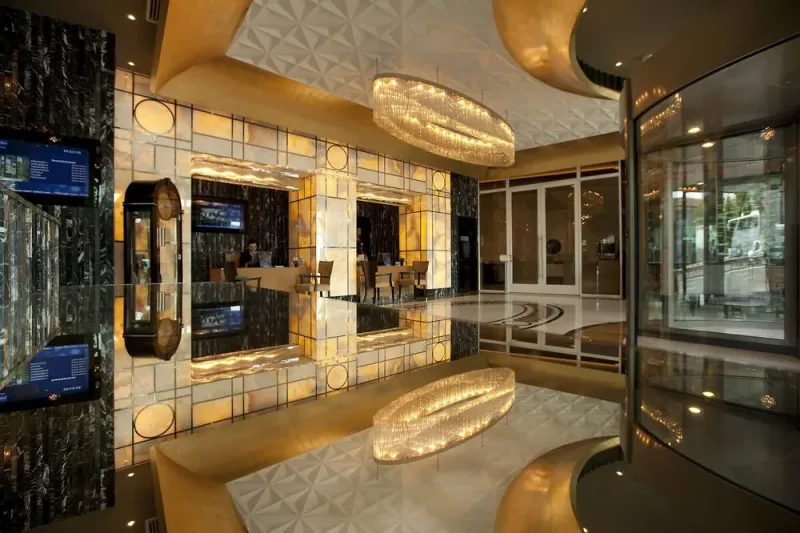
Marble and Light: A Designer's Guide to Stone That Shines
No building material has a more intimate relationship with light than marble. Stone quarried in darkness, it comes alive only when light finds it; and what happens at that meeting point is neither passive nor predictable. Marble reflects, absorbs, scatters, glows, and changes personality from dawn to dusk. For architects, interior designers, and contractors specifying stone, understanding that relationship is not a poetic indulgence. It is a technical necessity.
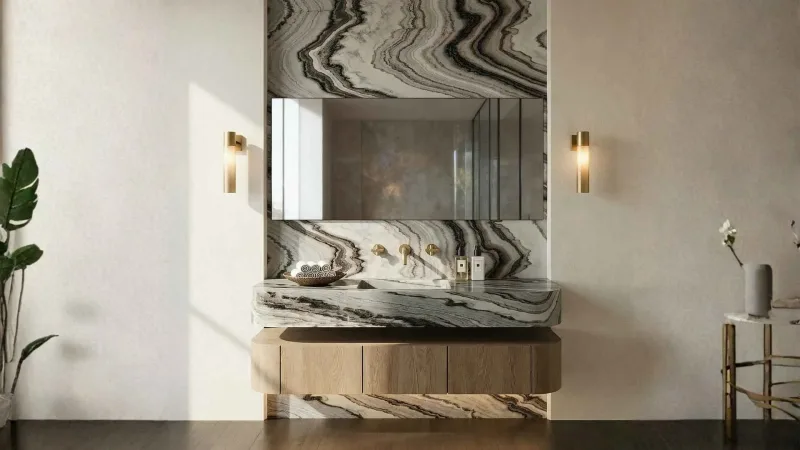
The Architect’s Checklist: What to Ask Your Marble Supplier Before You Approve a Slab
Choosing a marble slab is never only about color and beauty. For architects, approval is a technical decision, a procurement decision, and a design decision all at once. A slab may look extraordinary in the showroom, yet still be the wrong choice for the project if its finish, thickness tolerance, structural behavior, maintenance profile, or documentation do not align with the intended use. Each project and specification must be evaluated through declared geometrical, physical, and mechanical characteristics, along with testing, sampling, and factory production control.
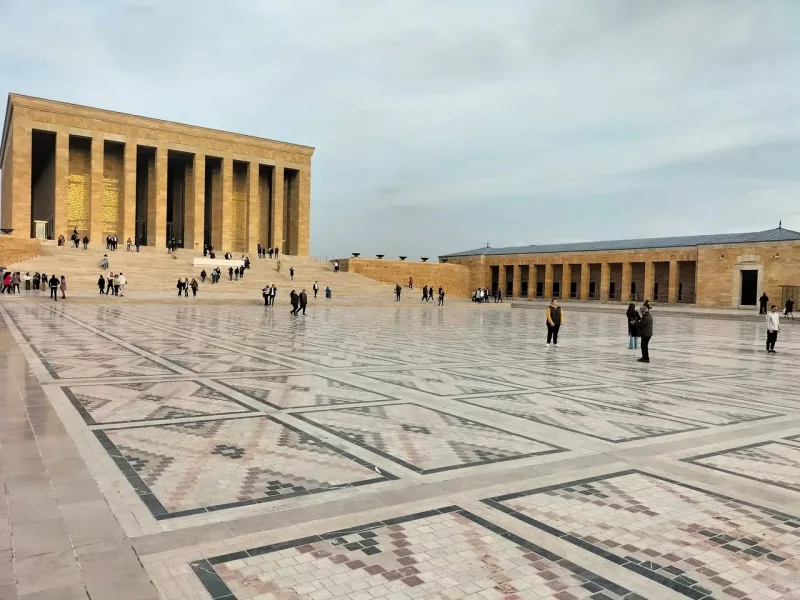
Marble Mosaics in Architecture and Interior Design
Discover how marble mosaics are used in contemporary architecture and interior design, combining craftsmanship, durability, and timeless natural stone elegance.
You May Also Like

5 REASONS TO VISIT US DURING MARMOMAC
Marmomac is around the corner and it is one of the best opportunities of the year to meet our dear friends, clients, and collaborators. Here are 5 reasons why you won't want to miss out on our stands:1 - A Selected Collection of Natural Stone: Our stands will showcase an extensive collection of over 12 different marble selections of our best sellers. Each piece has been carefully selected to reflect the latest trends in the architecture and design world.2 - Unleashing the Versatility of Natural Stone: Because one of the things we do like the most about Stone is its versatility, we wa...
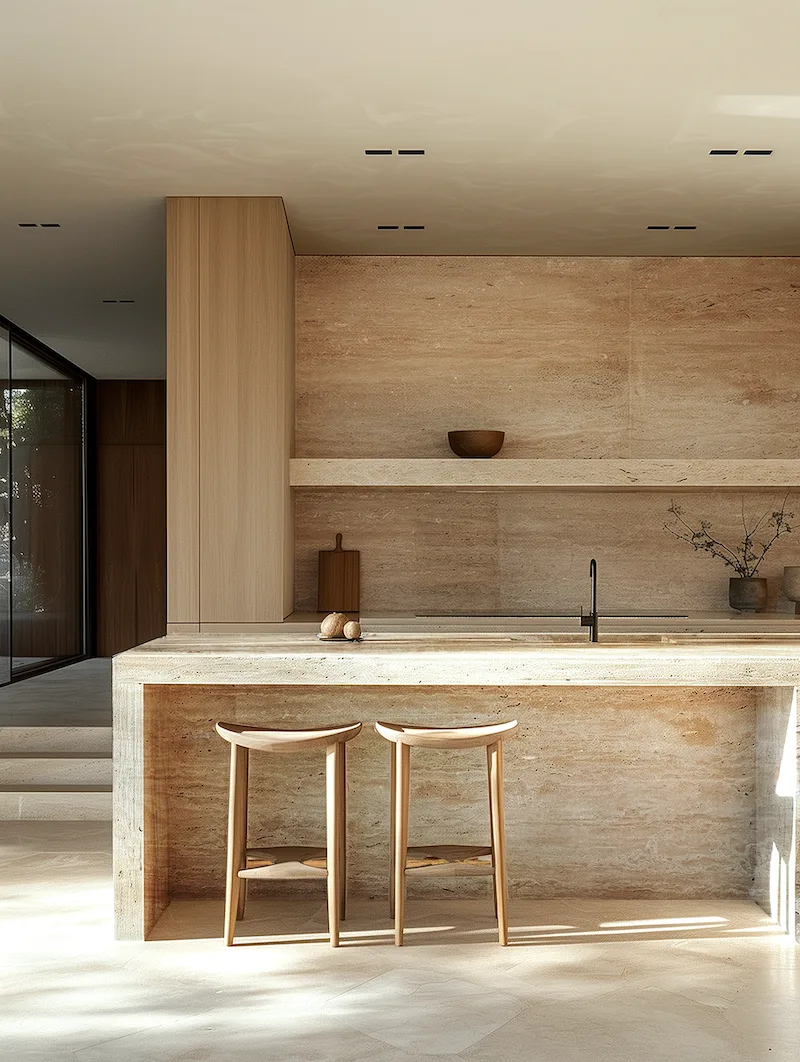
2025 KITCHEN TRENDS MEET TIMELESS NATURAL STONE
A Love Letter to Kitchens That Embrace Natural Beauty: Every year, interior design evolves, bringing in new ways to express creativity, personality, and lifestyle. Yet, it’s impossible to ignore how stone plays a major role in shaping these trends.Kitchens in 2025 are making bold statements—going beyond just function to become the heart and soul of a home. And what better way to bring depth, elegance, and timelessness to a space than with natural stone? It’s not just a surface; it’s a story written by nature, waiting to be told in the most beautiful way.Here are some of our favorite up...
EİB ÖDÜLLÜ SEZGİN MARBLE, MARBLE İZMİR 2025’TE
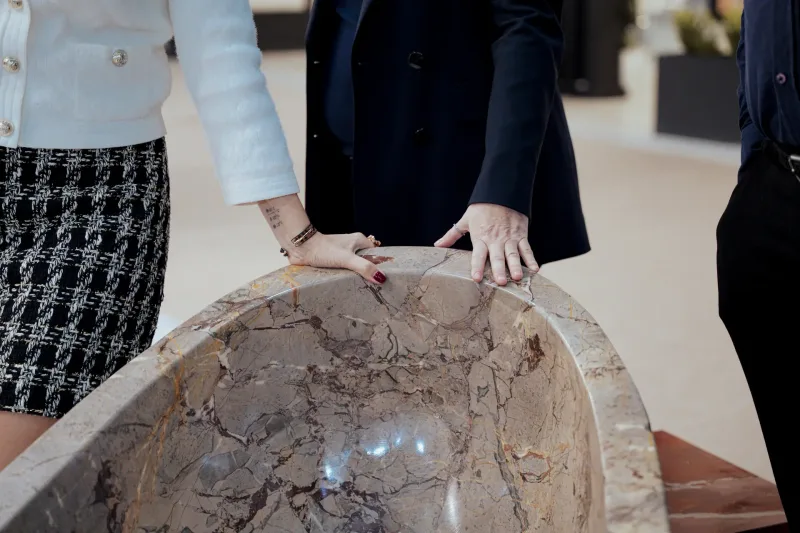
Ege İhracatçılar Birliği tarafından ödüllü Sezgin Marble, 9-12 Nisan 2025 tarihleri arasında düzenlenen Marble İzmir Fuarı’na katılıyor. 2007 yılından bu yana Türkiye’nin doğal taşlarını ve mermerlerini yurtdışına pazarlayan Sezgin Marble, fuarda konuklarını dünya taşları ile buluşturacak ve yepyeni bir girişimin ilk lansmanını gerçekleştirecek.2007 yılında Reyhan Sezgin ve Özgür Sezgin tarafından kurulan Sezgin Marble, doğal taş sektöründe faaliyet gösteren ve Türkiye’nin en kaliteli mermerlerini dünya pazarına sunan lider firmalardan biri...