

The Architect’s Checklist: What to Ask Your Marble Supplier Before You Approve a Slab
Choosing a marble slab is never only about color and beauty. For architects, approval is a technical decision, a procurement decision, and a design decision all at once. A slab may look extraordinary in the showroom, yet still be the wrong choice for the project if its finish, thickness tolerance, structural behavior, maintenance profile, or documentation do not align with the intended use. Each project and specification must be evaluated through declared geometrical, physical, and mechanical characteristics, along with testing, sampling, and factory production control.
Choosing a marble slab is never only about color and beauty. For architects, approval is a technical decision, a procurement decision, and a design decision all at once. A slab may look extraordinary in the showroom, yet still be the wrong choice for the project if its finish, thickness tolerance, structural behavior, maintenance profile, or documentation do not align with the intended use. Each project and specification must be evaluated through declared geometrical, physical, and mechanical characteristics, along with testing, sampling, and factory production control.
A strong marble supplier does more than present attractive material. They should be able to explain provenance, expected variation, finishing options, fabrication limits, compliance documents, and performance data with clarity.
Suppliers such as Sezgin Marble position their stones not just as raw slabs, but as materials supported by quarry control, architectural applications, and custom production options, which is the level of conversation architects should expect from any serious partner.
We have curated a few important spots for architects to communicate during their stone selection. Specification and buying process:
Where exactly does this marble come from?

Start with origin. Ask which quarry the slab comes from, whether the supplier controls or directly manages sourcing, and whether the stone is consistently available from the same source. Provenance matters because it affects continuity of color, veining, geological character, replacement strategy, and long-term specification reliability.
This is also where supplier credibility begins. Sezgin Marble, for example, describes Café Amore as quarried and produced in Turkey under strict quality control and available in multiple formats, from large slabs to custom cut-to-size pieces. That kind of traceable sourcing and production language is useful because it gives the architect a clearer basis for specification.
Is this slab right for the intended application?

A beautiful marble is not automatically appropriate for every use. Ask the supplier whether the exact stone has been used successfully for flooring, wall cladding, stairs, vanity tops, wet areas, or exterior work, and request project references where possible. The question is not “Is marble suitable?” but “Is this specific marble, in this finish and thickness, suitable for this exact condition?” Standards for stone slabs distinguish among applications such as floors, stairs, and cladding because performance requirements differ.
Sezgin Marble’s experience, expertise and product language is helpful here because it identifies intended uses for its materials, including flooring, wall cladding, kitchen and bathroom surfaces, and hospitality or commercial settings. That does not replace project-specific engineering or detailing, but it is a useful first filter.
What variation should I expect across slabs?

Marble is a natural material, not a printed surface. Ask to see the full slab range, not just a single hero slab or a small sample. Request information on movement, background shifts, mineral activity, open veining, filled areas, and expected differences between batches. If the project is large, ask the supplier to identify the likely production range and whether reserve quantities can be held.
This is especially important because current design demand is moving toward richer tactility, stronger character, warmer tones, and more expressive stone surfaces rather than uniform minimalism. Sezgin Marble’s own 2026 trend report points to honed finishes, monolithic usage, and more sculptural, character-rich applications, which makes variation management even more important at approval stage.
Can you show me the slab layout and sequencing strategy?
For multi-slab projects, ask how the supplier proposes to sequence the slabs. Will there be bookmatching, vein matching, or a deliberate tonal rhythm? Can the slabs be reserved in sequence? Can they produce a layout drawing or digital slab map? The earlier this is discussed, the less likely the project is to suffer from visual inconsistency on site.
A good supplier should be ready to collaborate at this level. The Natural Stone Institute specifically frames architect-supplier collaboration as a way to improve design outcomes and encourage better project coordination between quarry, manufacturer, designer, and installer.
What thickness, tolerances, and backing conditions apply?
Ask the supplier for nominal thickness, actual measured thickness range, flatness, edge conditions, and whether any slabs include mesh backing, resin treatment, reinforcement, or repairs. Thickness tolerance is not a minor issue; it affects substrate build-up, adhesives, joints, alignment, anchoring logic, and installation cost. Standards for stone slabs address geometrical characteristics, testing, sampling, and conformity, which is why tolerances should be reviewed before approval and not discovered during installation.
If the slabs are intended for cladding or thin applications, also ask whether the stone is appropriate for the proposed anchoring and support system. In short: approve the slab together with its fabrication and installation logic, not as an isolated surface.
Which finish is best for the project conditions?

The finish changes both appearance and performance. Ask what finish is recommended for the project’s real conditions: polished, honed, brushed, leathered, sandblasted, or another treatment. For floors, stairs, entrances, pool-adjacent areas, and bathrooms, slip resistance and wet performance must be discussed early. EN 12058 includes slip and skid resistance among key safety and performance properties for slab applications, and Stone Federation guidance similarly stresses that evaluation should reflect actual use.
This is also where design ambition and technical prudence must meet. A highly polished slab may be visually perfect in a presentation but a poor choice in a wet circulation area.
How will the stone behave in wet areas or exposed environments?
If the slab will be used in bathrooms, spas, terraces, or semi-exterior conditions, ask specifically about porosity, wetting and drying behavior, sealing needs, and detailing constraints. Stone Federation guidance notes that wetting and drying expansion may need to be evaluated, and that the stone should be assessed according to intended use with the relevant product standard and performance documentation.
This question often reveals whether the supplier is simply selling stock or truly understands architectural specification.
What maintenance will the client inherit?
Every slab approval should include an operations question: how will the material age, stain, etch, or require maintenance in real life? Ask what daily cleaning methods are recommended, whether sealing is advised, how often resealing may be needed, and which substances should be avoided. Natural stone is durable, but durability does not mean zero maintenance. The Natural Stone Institute’s design resources include dedicated guidance for maintenance, wet areas, and interior applications because long-term performance depends on correct care as much as correct selection.
This is especially important in hospitality, residential kitchens, luxury retail, and high-touch commercial settings, where appearance retention is part of the design brief.
What fabrication capabilities are available beyond standard slabs?

Ask whether the supplier can provide cut-to-size pieces, special edging, furniture components, integrated elements, bookmatched sets, stair treads, skirtings, or bathroom and kitchen applications. Suppliers with real architectural capability can support design continuity from slab approval through fabrication packages.
Sezgin Marble explicitly presents certain stones as available not only in slabs and tiles but also as custom cut-to-size and furniture pieces. For architects, that matters because it opens the door to designing with a single stone language across surfaces, volumes, and bespoke elements.
What is the lead time, reserve policy, and replacement strategy?

Ask how long the current batch can be held, whether extra slabs can be reserved for later phases or future repairs, and what happens if the selected range sells out before production begins. Marble projects often fail not because the stone was wrong, but because continuity was assumed rather than secured.
This is where quarry access, stock management, and supplier transparency become part of architectural risk management.
Finally: What exactly am I approving?
Finally, ask the supplier to define the approval package clearly. Is the approval tied to one photographed slab, a full bundle, a finish sample, a mock-up, a shop drawing, or a production range? This sounds basic, but many disputes begin with vague approvals. The architect should confirm what constitutes the accepted benchmark for appearance, finish, dimensions, and performance documentation.
Approval should never be a casual yes to a beautiful image. It should be a controlled decision backed by data, sampling, and alignment between design intent and construction reality.
________
The best marble suppliers do not just sell slabs; they reduce uncertainty. They help the architect understand where the stone comes from, how it will perform, how it will vary, how it should be fabricated, and how it should be maintained. That is why the smartest approval process is not a visual inspection alone, but a structured conversation.
A marble slab can elevate a project tremendously. But only when the architect asks the right questions before saying yes.
Latest Articles

Marble and Light: A Designer's Guide to Stone That Shines
No building material has a more intimate relationship with light than marble. Stone quarried in darkness, it comes alive only when light finds it; and what happens at that meeting point is neither passive nor predictable. Marble reflects, absorbs, scatters, glows, and changes personality from dawn to dusk. For architects, interior designers, and contractors specifying stone, understanding that relationship is not a poetic indulgence. It is a technical necessity.

From Classic to Contemporary: Specifying Marble Finishes for the Modern Interior
Marble has always been the best material for architectural design. From Roman civic structures and Ottoman palaces to twentieth-century banking halls and the marble-clad foyers of mid-century corporate headquarters, the material has been used as a load-bearing symbol of permanence, public authority and private wealth. That symbolic register has not disappeared. What has changed is the way contemporary architects, interior designers and developers specify the stone: less as a finished surface to be admired, more as a worked material to be detailed, articulated and integrated.
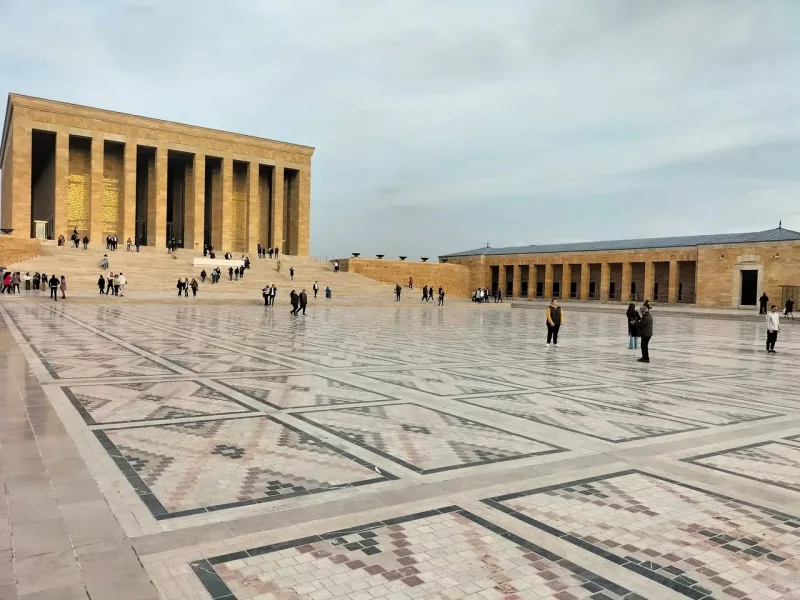
Marble Mosaics in Architecture and Interior Design
Discover how marble mosaics are used in contemporary architecture and interior design, combining craftsmanship, durability, and timeless natural stone elegance.
You May Also Like

5 REASONS TO VISIT US DURING MARMOMAC
Marmomac is around the corner and it is one of the best opportunities of the year to meet our dear friends, clients, and collaborators. Here are 5 reasons why you won't want to miss out on our stands:1 - A Selected Collection of Natural Stone: Our stands will showcase an extensive collection of over 12 different marble selections of our best sellers. Each piece has been carefully selected to reflect the latest trends in the architecture and design world.2 - Unleashing the Versatility of Natural Stone: Because one of the things we do like the most about Stone is its versatility, we wa...
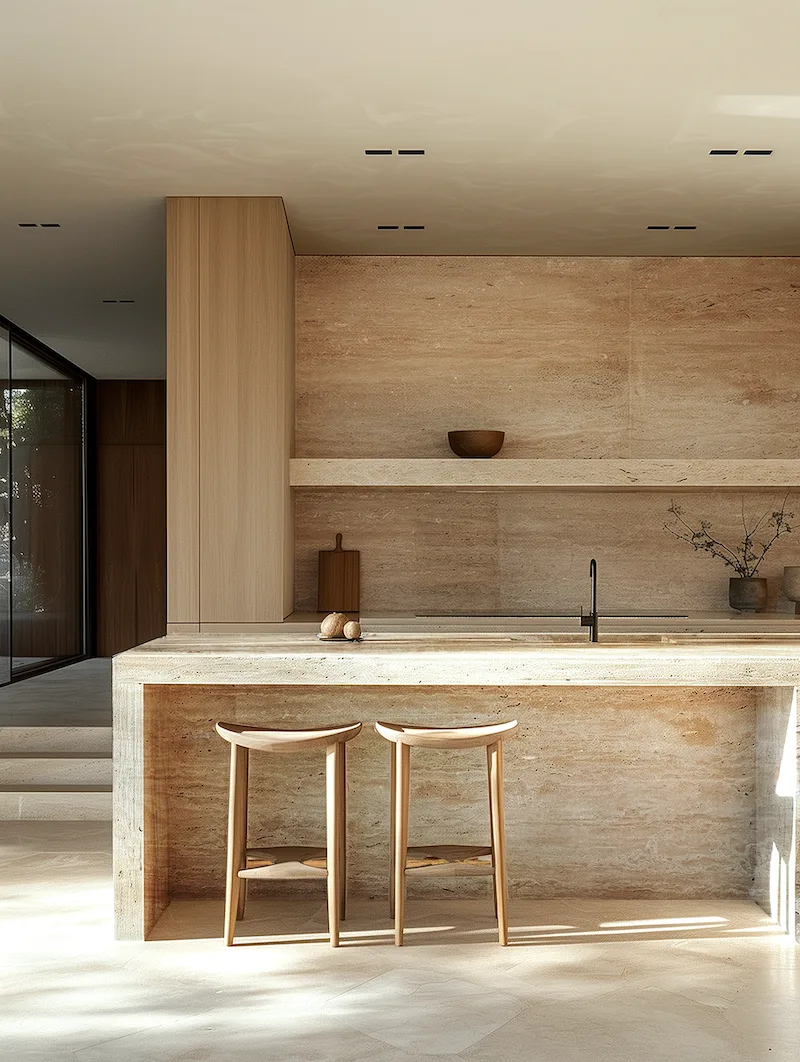
2025 KITCHEN TRENDS MEET TIMELESS NATURAL STONE
A Love Letter to Kitchens That Embrace Natural Beauty: Every year, interior design evolves, bringing in new ways to express creativity, personality, and lifestyle. Yet, it’s impossible to ignore how stone plays a major role in shaping these trends.Kitchens in 2025 are making bold statements—going beyond just function to become the heart and soul of a home. And what better way to bring depth, elegance, and timelessness to a space than with natural stone? It’s not just a surface; it’s a story written by nature, waiting to be told in the most beautiful way.Here are some of our favorite up...

EİB ÖDÜLLÜ SEZGİN MARBLE, MARBLE İZMİR 2025’TE
Ege İhracatçılar Birliği tarafından ödüllü Sezgin Marble, 9-12 Nisan 2025 tarihleri arasında düzenlenen Marble İzmir Fuarı’na katılıyor. 2007 yılından bu yana Türkiye’nin doğal taşlarını ve mermerlerini yurtdışına pazarlayan Sezgin Marble, fuarda konuklarını dünya taşları ile buluşturacak ve yepyeni bir girişimin ilk lansmanını gerçekleştirecek.2007 yılında Reyhan Sezgin ve Özgür Sezgin tarafından kurulan Sezgin Marble, doğal taş sektöründe faaliyet gösteren ve Türkiye’nin en kaliteli mermerlerini dünya pazarına sunan lider firmalardan biri...