
Marble and Light: A Designer's Guide to Stone That Shines
No building material has a more intimate relationship with light than marble. Stone quarried in darkness, it comes alive only when light finds it; and what happens at that meeting point is neither passive nor predictable. Marble reflects, absorbs, scatters, glows, and changes personality from dawn to dusk. For architects, interior designers, and contractors specifying stone, understanding that relationship is not a poetic indulgence. It is a technical necessity.
How reflection, translucency, and finish transform marble from a material into an experience
We are presenting how light and marble interact at a physical level, how different types and finishes perform under different lighting conditions, and how some of the world's most celebrated spaces have used that knowledge to make stone do extraordinary things, in this blog.
Marble Responds to Light Differently Than Other Stones
At the molecular level, marble is a metamorphic rock composed primarily of recrystallized calcite or dolomite. Those crystals (0.1 to 5 mm across) are the reason marble behaves the way it does in light. Light that strikes marble's surface does not simply bounce back as it would off glass or polished metal. A portion of it penetrates the surface, scatters through the crystalline structure, and re-emerges at a slightly different point. This phenomenon, known in physics as subsurface scattering, gives marble its characteristic inner warmth; that sense that the stone is lit from within rather than merely lit from without.
The thickness of the slab, the density of the crystal matrix, and the presence of veining and mineral inclusions all modulate how much light passes through versus how much is scattered back. A 20 mm slab of white Calacatta held against a light source will transmit enough glow to read veining in backlit silhouette. A 30 mm slab of dark Nero Marquina will transmit almost nothing, redirecting nearly all energy into surface reflection. Both are correct responses — but they demand different design thinking.
Reflection: The Surface Story
The reflective quality of marble is primarily governed by its finish, not its color. The same block of stone processed to a polished, honed, or brushed finish will behave as three entirely different materials under identical lighting conditions.

Polished Marble
A high-polish surface approaches mirror-like reflectivity. Light bounces back at sharp, specular angles, emphasizing vein contrast and saturating color depth. White marbles become luminous; dark marbles acquire an almost lacquered intensity. In a space with strong directional natural light like a south-facing gallery or a glass-roofed atrium, polished marble will track the movement of the sun across the floor, turning the material itself into a sundial. This dynamism is a design asset, but it also means that the material's appearance is never static. Specifiers should view polished marble under the actual lighting conditions of the final space, not under showroom fluorescents.
The weakness of a high polish is directionality. Raking light at low angles like early morning sun, low winter sun, or artificial accent lighting close to the surface, will expose every scratch, tool mark, and laying irregularity. For floor applications in hospitality and retail, where maintenance intensity is high, this demands a clear specification of polishing standards and an ongoing maintenance regime.

Honed Marble
A honed finish cuts the specular reflection almost entirely, replacing it with diffuse, matte luminosity. Light scatters in all directions rather than bouncing at a single angle, producing a consistent, even glow that reads well under both natural and artificial light. Honed surfaces are more forgiving of low-angle light, more practical in high-traffic settings, and according to the view of many architects working with modernist restraint, it’s found more honest to the material's geological character
Honed white marbles such as Carrara or Anatolian whites as Afyon perform particularly well in rooms dependent on borrowed light or northern exposures, where a polished surface might feel cold. The matte finish absorbs and redistributes available light rather than focusing it into competing reflections.
Brushed and Leathered Finishes
A brushed or leathered texture introduces micro-relief to the surface, creating thousands of tiny shadows that give marble tactile depth and a warm, aged character. These finishes perform well under warm artificial light and are especially effective in residential settings where the stone is experienced at close range; a kitchen island, a fireplace surround, a bathroom vanity. Under raking light, the texture reads as richly dimensional rather than exposing flaws.

Translucency: The Interior Light
The translucent quality of marble is its capacity to transmit and diffuse light and it is one of the most underused properties in contemporary design. Architects and designers who specify stone primarily as a cladding material frequently leave this dimension unexplored.
The effect is most pronounced in slabs thinner than 20 mm and in white or light-toned varieties with low mineral contamination. Calacatta Oro, Statuario Venato, Bianco Covelano, White Onyx, Honey Onyx, Pink Onyx and Rainbox Onyx as well s certain Turkish white marbles such as Afyon White exhibit measurable translucency at standard slab thicknesses. When backlit whether by natural light transmitted through a glazed façade or by LED panels set behind a stone screen, these marbles transform. The vein pattern, invisible from one side, becomes a dramatic graphic element lit from within. The stone stops reading as solid matter and begins to read as a membrane.
This behavior has historical precedent at the grandest possible scale. The Makrana marble used in the Taj Mahal was selected in part for its capacity to absorb and release light , what Mughal court poets described as a cloud, or as early dawn. Under noon sun the mausoleum reads as brilliant white; at dusk it turns amber and rose; under moonlight it appears silver-grey. That range of appearance is not accidental. It is the designed consequence of understanding how a specific stone variety responds to the full spectrum of natural illumination across a day.
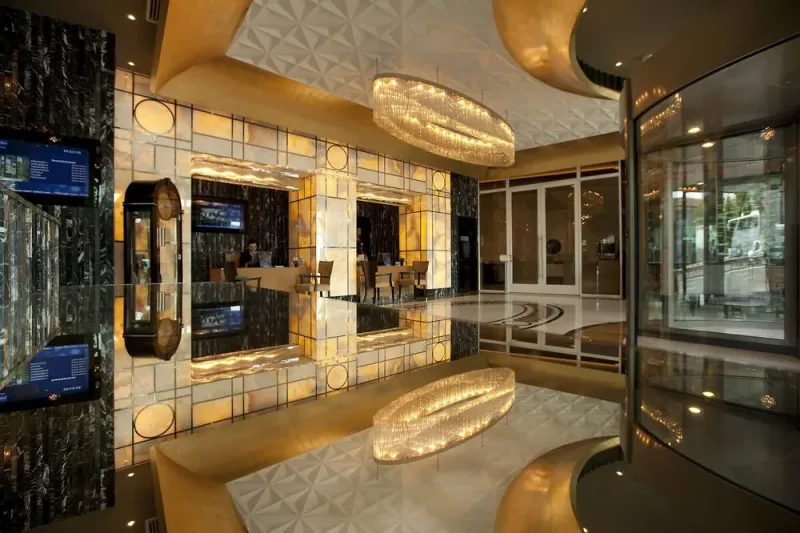
In contemporary practice, backlit Onyx panels have become a signature feature of luxury hotel lobbies, high-end residential wine cellars, hospitality bar backs, and retail feature walls. The technical requirements are straightforward: a low-heat LED source, a diffuser layer to eliminate point-source hotspots, and a stone selection validated by a light transmission test at the specified thickness. What is less straightforward is the design discipline to use the effect with restraint. Backlit marble works because it is unexpected as a single glowing wall, a lit stair tread, an illuminated threshold in interiors. When overused, it becomes spectacle rather than architecture.

Iconic Precedents: Masters Understood The Power of Light and Marble in Design
The Parthenon, Athens, 5th century BC
The Pentelic marble used in the Parthenon was chosen in part because its mica content which is higher than Parian marble and catches Attic sunlight and gives the columns a warm, golden glow. The architects of the Acropolis understood that the material they were selecting would perform differently at different times of day, and that its ageing under sun, rain, and sea air would produce a patina that enhanced rather than degraded its luminous quality. The Parthenon at sunset has never looked the same twice; a condition built into the specification from the beginning.
Taj Mahal, Agra, 17th century
Shah Jahan's architects specified Makrana marble ( a dolomitic marble from Rajasthan with unusually high calcite purity) for its demonstrable capacity to change color under changing light. The theological significance of light in Mughal culture made this a programmatic, not merely aesthetic, decision. The monument is, among other things, a light instrument: an architecture designed to perform differently at every hour and in every season. Its white marble surface at dawn, at noon, at dusk, and under a full moon reads as four different materials from the same stone.

Therme Vals, Switzerland, Peter Zumthor, 1996
Zumthor's thermal baths in the Swiss Alps use Valser quartzite rather than marble, but the approach to stone and light is the most rigorously considered of any late twentieth-century building and directly informs how designers should think about marble's potential. Light enters the bath chambers through precise linear cuts in the roof, falling in narrow bars across stone walls and water surfaces. The stone absorbs heat and reflects light; the water moves; the whole ensemble changes continuously. For Zumthor, the material's relationship to light was not a secondary consequence of construction. It was the project's primary subject.

Apple Via del Corso, Rome, Foster + Partners, 2016
Foster + Partners' restoration of the Palazzo Marignoli for Apple's Rome flagship demonstrates how marble and contemporary lighting technology work together. Locally sourced Carrara marble was specified for the grand staircase; LED lighting integrated into the oculus above changes color temperature throughout the day to track natural light conditions. The result is a space where the marble appears to shift register from morning cool to evening warmth; a contemporary restatement of the Taj Mahal principle in a retail context.

Barcelona Pavilion, Mies van der Rohe, 1929 / reconstructed 1986
No building has used marble more deliberately as a light instrument than the German Pavilion in Barcelona. Mies specified four distinct stone varieties such as Tinos Green, Roman travertine, Alpine Green, and ancient gold onyx those not for their individual qualities alone but for the way they would perform in sequence as a visitor moved through the pavilion. The onyx wall, illuminated from above by a skylight, glows with amber warmth that transforms the character of the adjacent pool and chrome columns. The pavilion is essentially a study in how different stone surfaces redistribute a single source of natural light into multiple phenomenal experiences.
Applications by Space: A Practical Framework
Façades and Exterior Cladding
Exterior marble reads primarily as reflective surface. The orientation of the façade determines everything: south-facing marble in direct sun performs very differently from north-facing marble in diffuse overcast light. Dark veining on white ground provides maximum legibility in most conditions; pale veining on pale ground can disappear at distance. Bookmatched panels amplify veining drama and create a pattern that the eye reads as intentional composition rather than random geology. For tall façades, consider how the sun angle at various floors will read: upper floors may be in direct light while ground-level stone is in shade, creating an apparent color and value shift that should be modeled before specification is finalized.
Lobbies and Public Circulation
These are the spaces where marble's relationship to light most directly defines the visitor experience. Floor marble in a daylit lobby is in permanent conversation with sky conditions overhead; wall cladding behind reception desks is often in relative shadow. The discipline of specifying marble for lobbies is the discipline of knowing your light sources and their angles throughout the operating day. A single material used on floor and wall will read as two different materials if the floor is in direct light and the wall is not. This is not a defect, it is an opportunity to use the same stone to create tonal range within a unified palette.
Bathrooms and Wellness Spaces
These spaces are where marble's sensory qualities like its coolness to the touch, its subtle translucency, its variation under warm artificial light are most intimately experienced. Honed finishes are generally preferred for wet areas; they manage slip resistance better and age more gracefully under the mild acid content of cleaning products and skin oils. Warm, indirect artificial light as concealed sources washing walls rather than spotlighting surfaces works best with white and beige marbles. Direct downlighting on a polished marble floor creates a dramatic pool of reflection but also reveals every footprint within minutes of cleaning.
Staircases and Vertical Feature Elements
Staircases traverse both horizontal and vertical planes simultaneously, which means stone specified for a staircase must perform well under both overhead light and lateral light. Raking light on a stair riser will reveal any installation irregularity with brutal clarity. Bookmatched treads and risers, where vein continuity runs across the nosing from horizontal to vertical, create a visual coherence that disguises minor installation variation. Backlit stair treads using thin marble panels over LED channels are among the most effective uses of marble translucency in residential and hospitality design.
Countertops and Kitchen Islands
In residential kitchens, marble countertops are in close proximity and experienced under a combination of task lighting and ambient light. Under warm LED task lighting, the veining of Calacatta or Statuario reads at maximum drama; under cold daylight from a north-facing window, the same surface can appear flat. The design brief for a marble kitchen surface should specify the dominant light source and select the stone variety and finish accordingly. Polished surfaces show scratches and etching over time; honed surfaces hide both but absorb oils and require sealing. Neither is superior, the choice depends on the use intensity and maintenance culture of the client.
Specifying Marble for Light: A Checklist
Before finalising a marble specification, the following questions frame the key decisions:
— What is the primary light source? Natural, artificial, or both? What is its direction and color temperature?
— What finish is appropriate? Polished for drama and drama's maintenance requirements; honed for practicality and diffuse luminosity; leathered for warmth and tactility.
— Is translucency a design intention? If so, has the specific slab been tested for light transmission at the specified thickness?
— How will the stone age? Polished surfaces show wear as a loss of reflectivity; honed surfaces develop a traffic patina. Both changes should be anticipated in the specification.
— Has the stone been viewed under actual site lighting conditions, or only under showroom lighting? The same slab looks different under different color temperatures and intensities.
— For large cladding quantities, has batch consistency been confirmed? Veining character and ground color can shift between quarry lifts even within a single variety.
Stone That Listens to the Sky
There is a reason marble has been the material of record for humanity's most significant spaces as temples, mausolea, civic buildings, contemplative baths across four thousand years of architecture.
It is not durability alone, though marble is durable.
It is not prestige alone, though marble carries cultural weight.
It is the fact that marble is never finished. It continues to perform. It responds to morning light and evening light, to a candle and a chandelier, to an overcast winter sky and a blazing summer noon. It has a relationship with time that no manufactured material can replicate.
For designers and specifiers, that responsiveness is both the challenge and the opportunity. Marble demands to be understood before it is specified. It rewards that understanding generously with spaces that are never quite the same twice, and that invite the people who move through them to notice how light moves through the world.
As Sezgin Marble we‘ve fallen to this legacy.
Latest Articles
From Classic to Contemporary: Specifying Marble Finishes for the Modern Interior
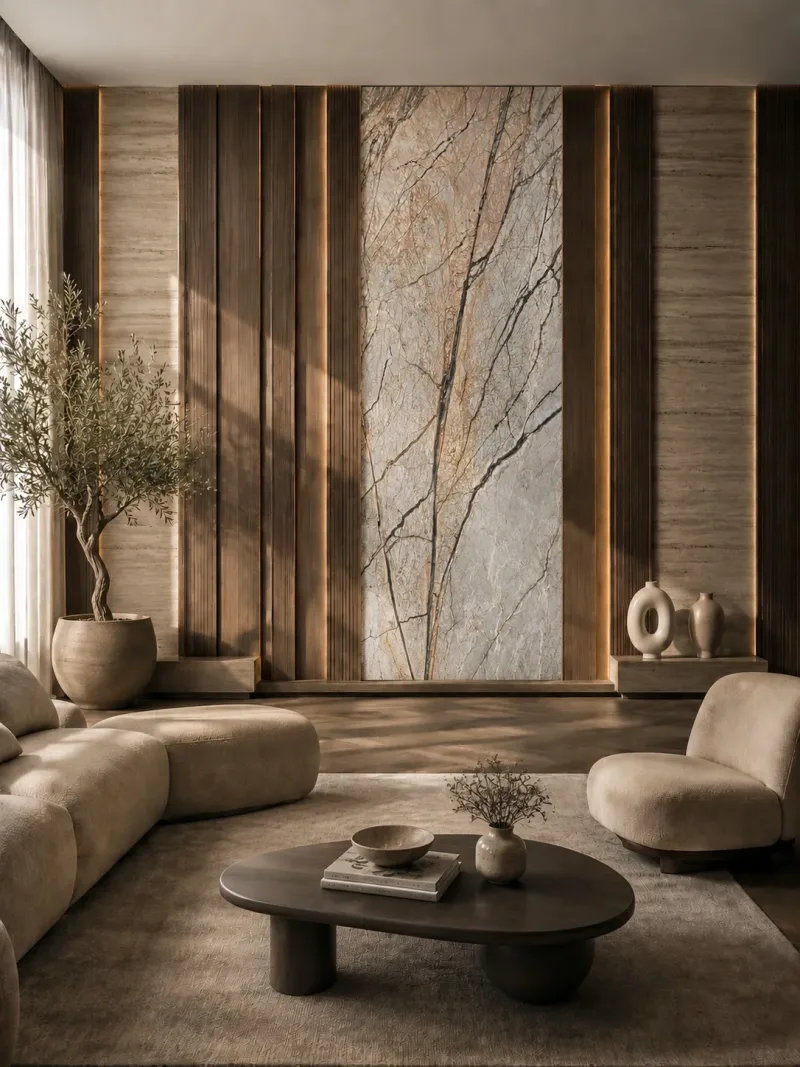
Marble has always been the best material for architectural design. From Roman civic structures and Ottoman palaces to twentieth-century banking halls and the marble-clad foyers of mid-century corporate headquarters, the material has been used as a load-bearing symbol of permanence, public authority and private wealth. That symbolic register has not disappeared. What has changed is the way contemporary architects, interior designers and developers specify the stone: less as a finished surface to be admired, more as a worked material to be detailed, articulated and integrated.
The Architect’s Checklist: What to Ask Your Marble Supplier Before You Approve a Slab
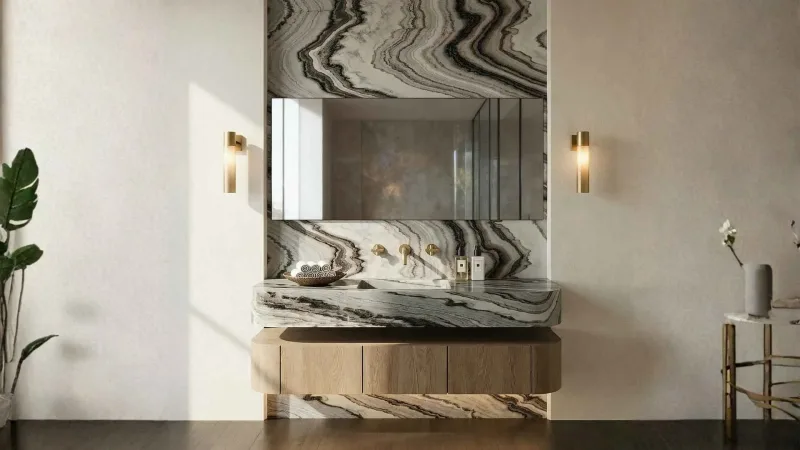
Choosing a marble slab is never only about color and beauty. For architects, approval is a technical decision, a procurement decision, and a design decision all at once. A slab may look extraordinary in the showroom, yet still be the wrong choice for the project if its finish, thickness tolerance, structural behavior, maintenance profile, or documentation do not align with the intended use. Each project and specification must be evaluated through declared geometrical, physical, and mechanical characteristics, along with testing, sampling, and factory production control.
Marble Mosaics in Architecture and Interior Design
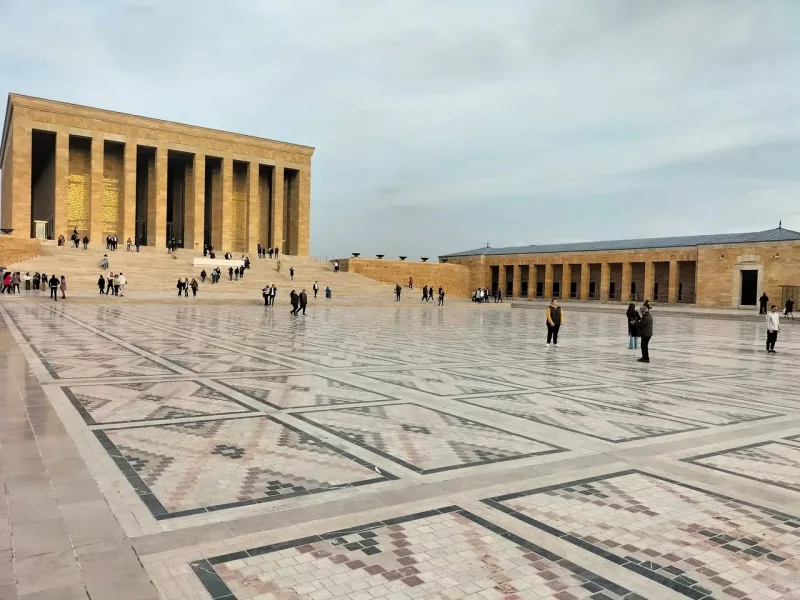
Discover how marble mosaics are used in contemporary architecture and interior design, combining craftsmanship, durability, and timeless natural stone elegance.
You May Also Like

5 REASONS TO VISIT US DURING MARMOMAC
Marmomac is around the corner and it is one of the best opportunities of the year to meet our dear friends, clients, and collaborators. Here are 5 reasons why you won't want to miss out on our stands:1 - A Selected Collection of Natural Stone: Our stands will showcase an extensive collection of over 12 different marble selections of our best sellers. Each piece has been carefully selected to reflect the latest trends in the architecture and design world.2 - Unleashing the Versatility of Natural Stone: Because one of the things we do like the most about Stone is its versatility, we wa...
2025 KITCHEN TRENDS MEET TIMELESS NATURAL STONE
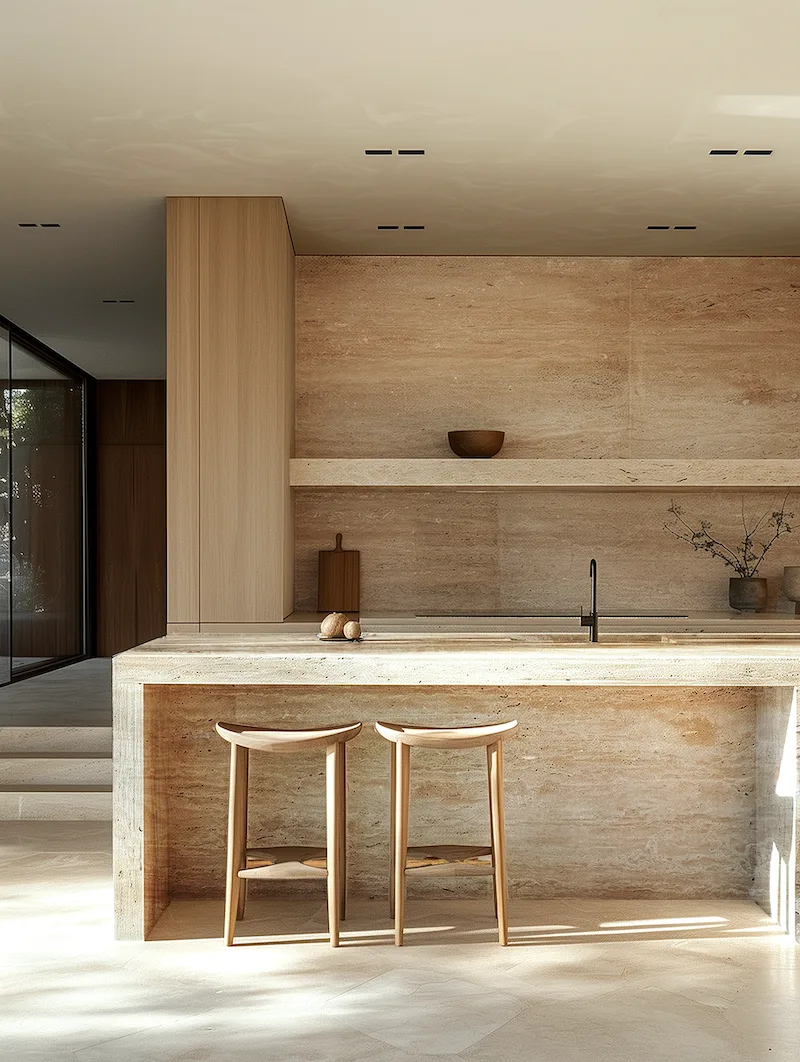
A Love Letter to Kitchens That Embrace Natural Beauty: Every year, interior design evolves, bringing in new ways to express creativity, personality, and lifestyle. Yet, it’s impossible to ignore how stone plays a major role in shaping these trends.Kitchens in 2025 are making bold statements—going beyond just function to become the heart and soul of a home. And what better way to bring depth, elegance, and timelessness to a space than with natural stone? It’s not just a surface; it’s a story written by nature, waiting to be told in the most beautiful way.Here are some of our favorite up...
EİB ÖDÜLLÜ SEZGİN MARBLE, MARBLE İZMİR 2025’TE
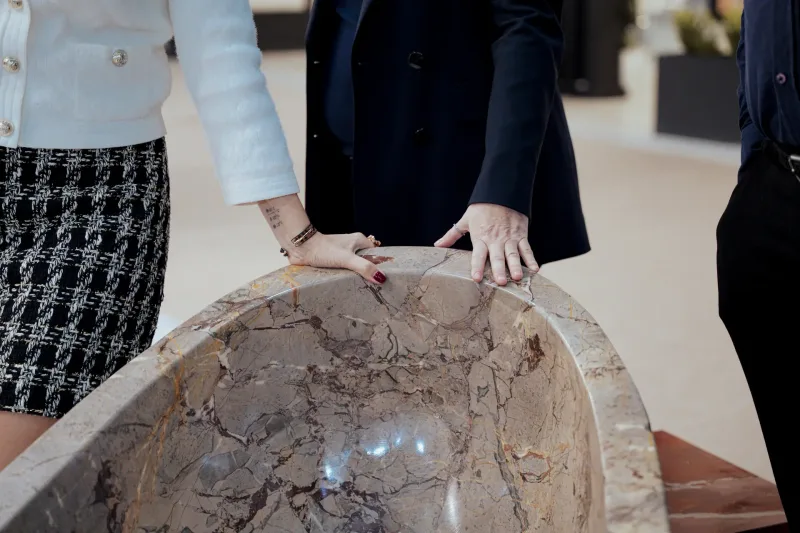
Ege İhracatçılar Birliği tarafından ödüllü Sezgin Marble, 9-12 Nisan 2025 tarihleri arasında düzenlenen Marble İzmir Fuarı’na katılıyor. 2007 yılından bu yana Türkiye’nin doğal taşlarını ve mermerlerini yurtdışına pazarlayan Sezgin Marble, fuarda konuklarını dünya taşları ile buluşturacak ve yepyeni bir girişimin ilk lansmanını gerçekleştirecek.2007 yılında Reyhan Sezgin ve Özgür Sezgin tarafından kurulan Sezgin Marble, doğal taş sektöründe faaliyet gösteren ve Türkiye’nin en kaliteli mermerlerini dünya pazarına sunan lider firmalardan biri...